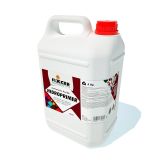


All Fixcer products are environmentally friendly. Fixcer manufactures with sustainable construction parameters and complies with the EN14.001 standard to reduce environmental impact.






All Fixcer products are environmentally friendly. Fixcer manufactures with sustainable construction parameters and complies with the EN14.001 standard to reduce environmental impact.






COLORS


FIELDS OF APPLICATION
- Ideal for increasing the mechanical characteristics, impermeability and adhesion of the FIXCOLOR 0/4 and FIXCOLOR 4/16.
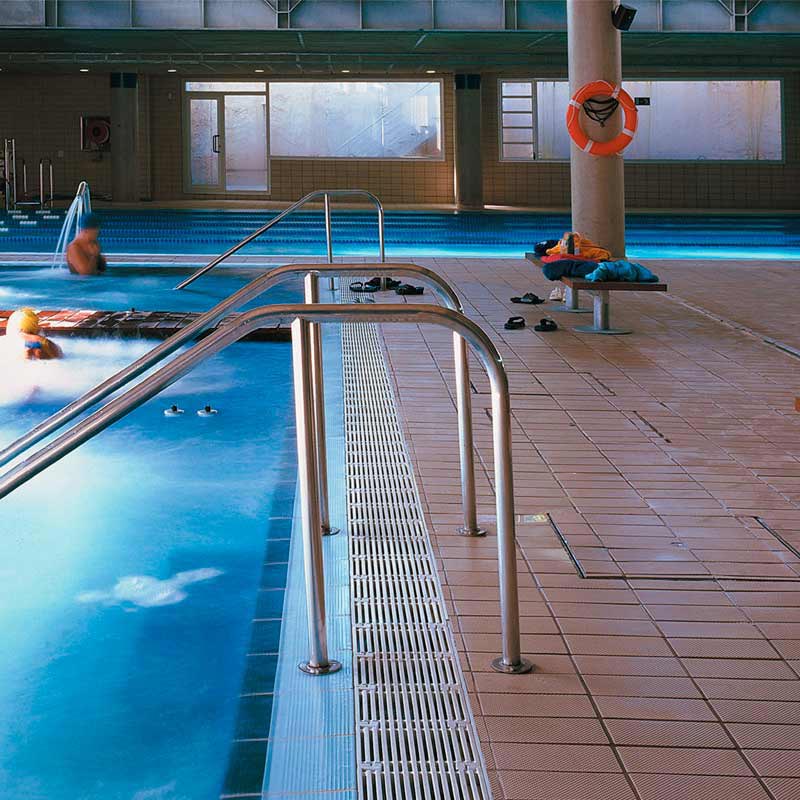
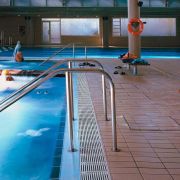
- Filling joints between tiles in swimming pools, tanks, etc., as it increases resistance to the usual products that can be poured into the water: urine, oils, bleach, detergents and similar.
- Filling joints between tiles on exteriors: balconies, façades and terraces.
Indispensable for repairing old or damaged joints.
HOW IS IT APPLIED?
Before applying LATEFIX we recommend as follows:
- Prior to the application of LATEFIX, clean all joints. The ideal starting point is to have strong, solid seals that are free of dust, paint, wax, oil or grease.
- When the installation has been carried out with rapid glue cement, grouting should be carried out after 4 hours.
- If the tile installation has been carried out with normal-drying thin-set mortar, grouting must be started after 24 hours.
- In very absorbent and dry joints or joints exposed to the sun in hot weather, the joints should be pre-moistened, bearing in mind, however, that too much humidity or a temperature outside the range of +5ºC to +35ºC does not guarantee good consistency or even colouration.
Preparing the mix:
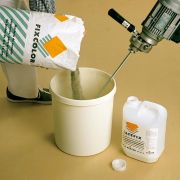
- Mix approximately 6 litres of LATEFIX with every 25 Kg of FIXCOLOR 0/4 or 5.5 litres of LATEFIX with every 25 Kg of FIXCOLOR 4/16.
- Mix the powder with the liquid little by little, stirring continuously. If possible, use an electric mixer at a low RPM until a homogeneous, pasty texture is achieved.
- Leave to stand for about 2 minutes and remix to make the mass ready for use.
- NEVER MIX LATEFIX WITH WATER.
- Recommendations for the application of LATEFIX
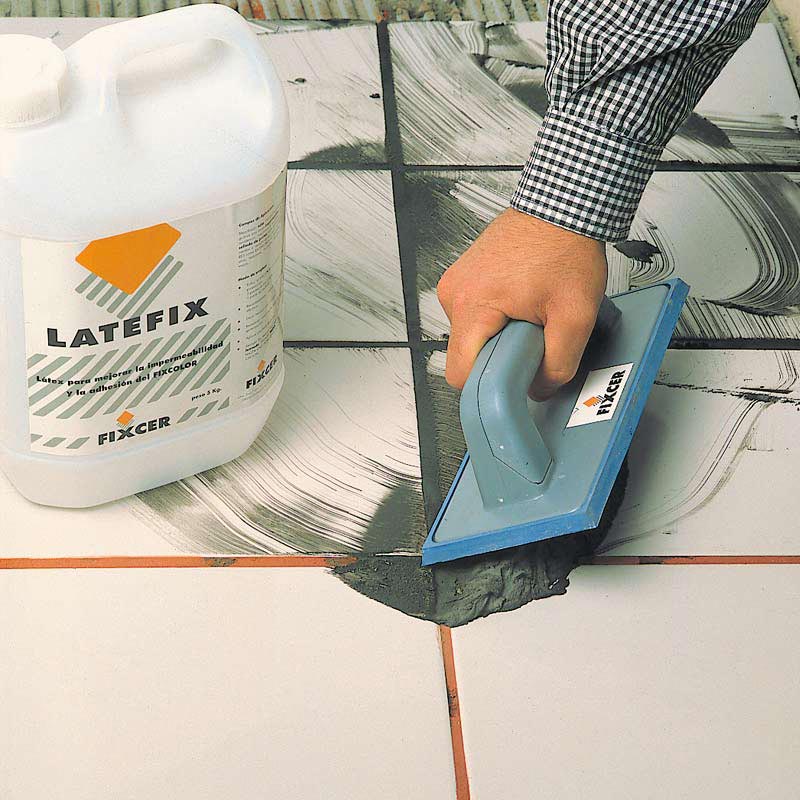
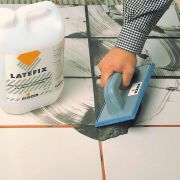
- Fill the joints completely with the help of a rubber spatula of the FIX-ESPATULA type, exerting sufficient pressure to fill all the existing cavities. Gradually collect all excess with the same spatula
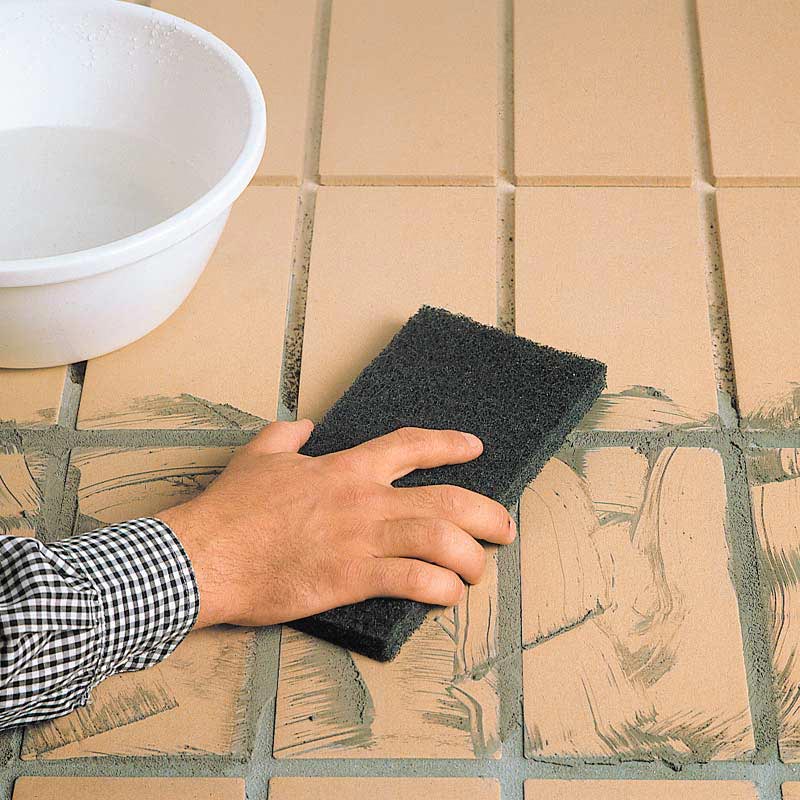
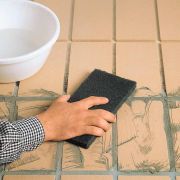
- After a maximum of 15 minutes after application, proceed to the surface finish of the joint and clean the tiles with the help of a slightly damp sponge. For large surfaces, there are rotary machines on the market with special discs for faster installation and cleaning (consult us).
- Download the PAVIFORT technical Data Sheet to check all the technical details and to ensure correct, safe application.
HOW IS IT RECYCLED?
- Use cardboard and paper recycling bins to dispose of unusable and empty sacks.
- Use plastic recycling bins for unusable and empty plastic packaging.
- Mortar residues and leftover building materials must be disposed of at the appropriate green point or recycling location for your district.